


How to File for Divorce in Karachi: A Step-by-Step Legal Guide (Pakistan)
Divorce is never an easy decision. If you are considering divorce in Karachi, understanding the legal process, documents required, timelines, and your rights can reduce stress and help you make informed decisions.
This guide explains how to file for divorce in Karachi step by step, according to Pakistani family law.ca
1. Understand the Types of Divorce in Pakistan
Before filing, it’s important to know which type of divorce applies to your situation.
🔹 Divorce by Husband (Talaq)
Under Islamic and Pakistani law, a husband may pronounce Talaq and must notify the Union Council.
🔹 Divorce by Wife (Khula)
If the husband does not consent, a wife can seek Khula through the Family Court by proving incompatibility.
👉 The legal process differs slightly for both, but both are governed by the Muslim Family Laws Ordinance, 1961.
2. Consult a Family Lawyer in Karachi (Highly Recommended)
Although you can file on your own, consulting a qualified family lawyer in Karachi helps ensure:
Correct documentation
Faster processing
Protection of child custody and financial rights
A lawyer can also advise whether settlement or mediation is possible before litigation.
3. Filing Divorce Through Union Council (For Talaq)
If the husband initiates divorce:
Step-by-Step Process:
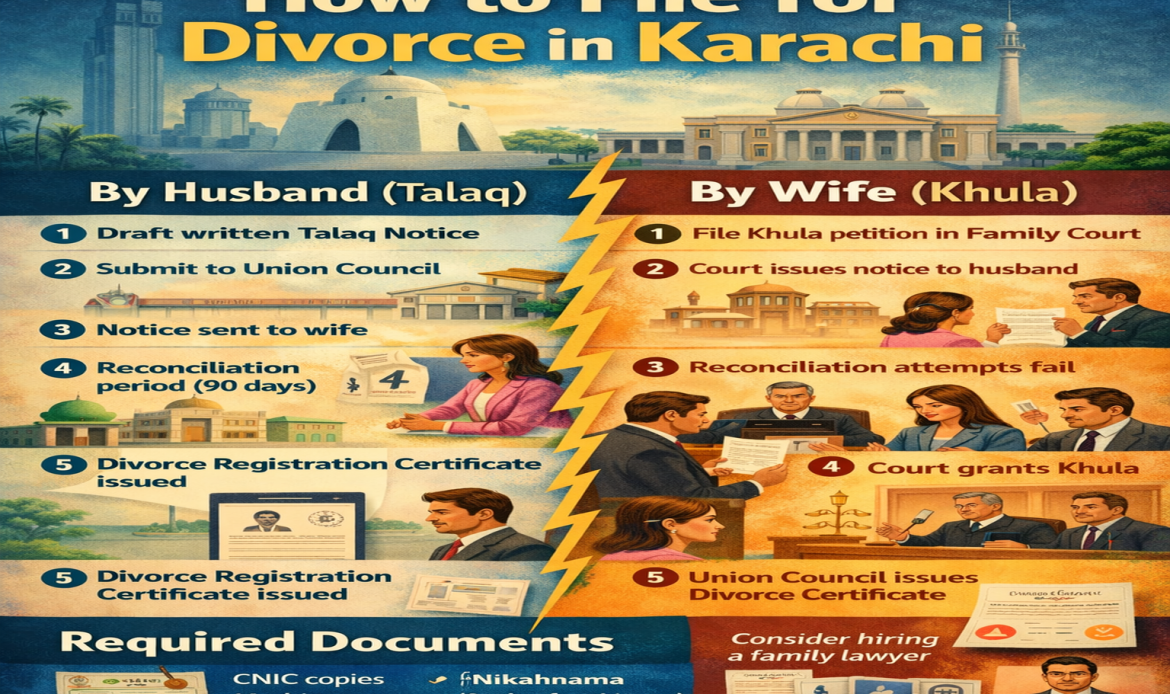
Written notice of Talaq sent to Union Council
Copy of notice sent to wife
Arbitration Council formed
Mandatory 90-day reconciliation period
Divorce becomes effective if reconciliation fails
📌 Failure to notify Union Council can result in legal penalties.
4. Filing Khula Through Family Court (For Wife)
If the wife files for divorce:
Step-by-Step Process:
File Khula petition in Family Court, Karachi
Court issues notice to husband
Reconciliation attempts by the court
If reconciliation fails, Khula decree is granted
Decree sent to Union Council for confirmation
⏳ Typical timeline: 3–6 months, depending on case complexity.
5. Required Documents for Divorce in Karachi
You will typically need:
CNIC copies of both spouses
Nikahnama (marriage contract)
Address proof
Children’s birth certificates (if applicable)
Khula statement (for wife-initiated divorce)
A lawyer ensures documents are properly drafted and filed.
6. Child Custody and Maintenance Matters
Divorce proceedings often involve:
Child custody (Hizanat)
Child maintenance
Visitation rights
Family Courts decide custody based on the best interest of the child, not gender alone.
7. Divorce Certificate Issuance
Once the process is complete:
Union Council issues Divorce Certificate
This certificate is legally required for:
Remarriage
NADRA marital status update
International documentation
8. Common Mistakes to Avoid During Divorce
❌ Not notifying Union Council
❌ Missing reconciliation period
❌ Poorly drafted petitions
❌ Ignoring child custody rights
❌ Handling legal steps emotionally instead of strategically
Legal guidance helps avoid delays and complications.
9. How Long Does Divorce Take in Karachi?
| Divorce Type | Estimated Time |
|---|---|
| Talaq | ~90 days |
| Khula | 3–6 months |
| Contested cases | 6–12 months |
Timelines vary depending on cooperation and court workload.
10. Final Thoughts
Filing for divorce in Karachi involves legal steps that must be followed correctly. Whether you are seeking Talaq or Khula, understanding the process empowers you to protect your rights and move forward with confidence.
If you are unsure which option applies to you, consulting a family law expert can save time, stress, and legal complications.
Need Legal Assistance?
If you are looking for an experienced family lawyer in Karachi, Al Haqq Law Firm can guide you through every step of the divorce process with professionalism and confidentiality.